Roman Oseghale's blog

________Leadership and advancement


Leave a comment

The Platform Nigeria | Unlocking the Potential in Our Country | 1st October 2024.

In 2018 when the Bill and Malinda Gates Foundation made the state that Nigeria and the Democratic Republic of Congo (DRC) will account for 40% of the total number of people living in Extreme Poverty by 2050, many never saw beyond the statement. Two countries rich in mineral and natural resources, after series of research and the fact that Nigeria will have five presidents from 2018 to 2050, I came to the conclusions backed by empirical facts and data that Mr. Gates assertion was not about who becomes president but about the system, Nigeria’s economic model is not designed to create wealth, it is an economic model that impoverishes the people.

Nigeria operates what have come to describe as an asset depletion economy, where assets are depleted to fund expenditure without appropriate re-injection of funds to cover the liabilities created by the depletion of assets. In simple words, Nigeria depletes its assets and increases liabilities and no nation has ever become rich by depleting assets and increasing liabilities. What makes the case of Nigeria worse is the fact that population is also spiraling out of control which contributes to the population moving faster into extreme poverty.

Roman Oseghale through his presentation at the platform details how Nigeria moved from a productive economy in the 60’s to a rent seeking economy in the 70’s, an economy driven by oil prices and orchestrated by wars and destabilization of the Middle East which prompts the increase in oil prices, Roman Oseghale matches data with wars and conflicts in the Middle East, and the data proves that the only time Nigeria records economic growth is when oil prices spiral upwards due to wars and conflicts in the Middle East. Roman Oseghale proves with data and demonstration how the system makes Nigeria and Nigerians poorer and irrespective of who becomes President, Nigeria and the DRC will account for 40% of people living in Extreme Poverty by 2050 if the Economic Model is not changed.
Leave a comment

NIGERIA – A look at the 2023 National Budget, and will it Impact the Economy.

___Nigeria is a poor country, and the country is broke, the trillions we hear deceives us!

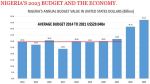
Between 2014 and 2021, Nigeria’s National Budget increased from N4.70 trillion to N13.08 trillion, increase of 178.3%, and between 2014 and 2023 the budget has increased from N4.70 trillion to N20.51 trillion, increasing by 336.4%.

But the interesting thing is the reality comes to life when the budget is converted to US Dollars, while the budget increased from N4.70 trillion to N13.08 trillion from 2014 to 2021 (178.3%) the dollar valued remained almost the same using the exchange rate in the budget for each year, in 2014 the US dollars equivalent of the budget was US$29.34 billion and by 2021 had only increased to US$31.89 billion (8.7%), between 2014 and 2021 the average national budget was US$29.04 billion while population increased from 176.4 million in 2014 to 213 million in 2021.

It wasn’t until 2022 that Nigeria’s national budget crossed US$40 billion for the first time in history to reach US$41.74 billion and reaching US$47.15 billion in 2023, between 2014 and 2023 the Naira equivalent of the budget increased by 336.4% while the US Dollars increased by only 60.7%.

Nigeria is a country rich in Mineral and Human resources but a poor country in wealth creation, the trillions of Naira we hear deceives us. Comparing the three largest economies in Africa only goes to substantiate this fact…..Nigeria with a projected population of 215 million people as at 2022 will operate a 2023 national budget of US$47.15 billion with a budget deficit of US$24.82 billion (52.65%), South Africa with a population of 59.4 million people is operating a budget size of US$136.6 billion dollars for its 2022/2023 fiscal year, while Egypt with a population of 109.3 million people is operating US$111 billion 2022/2023 national budget.

South Africa is just 28% of Nigeria’s population, but Nigeria’s budget is just 34.5% of South Africa’s budget and 42.5% of Egypt’s budget and Egypt is only 51% of Nigeria’s population. Nigeria’s budget per capita is a mere US$221 while that of South Africa is US$2,300 and Egypt US$1,016. Nigeria needs a budget that can impact the economy and spur economic growth what the country presently operates is a drop compared to what it should be.

Watch Roman Oseghale give a detailed analysis of the 2023 budget and why it cannot impact the economy to spur the economic growth Nigeria needs to create wealth for its people.


Leave a comment

The Continuous Depreciation of the Naira

Nigerians are losing the value of their wealth during both economic growth and economic recession. 

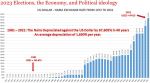
The Naira is a currency caught between the devil & the deep blue sea, it has depreciated against the US$ by 67,605% in 40yrs a currency it was once stronger than during both Economic Growth & Economic Recession eroding the wealth of Nigerians. During Economic growth the rate of depreciation is slower than when the economy is in recession, and the reason is when the economy is booming and Nigerians are making money they switch to luxury goods which also puts pressure on the Naira.

The only way to curb the continuous depreciation of the Naira is through industrialization and hard-line economic and social policies!

To stop the trend, Nigeria must move from Consumption Economy to a Production Economy.

Watch Roman Oseghale give an analysis of the trend and why.